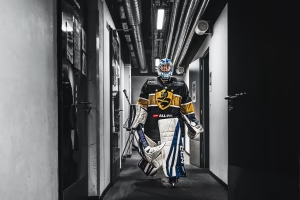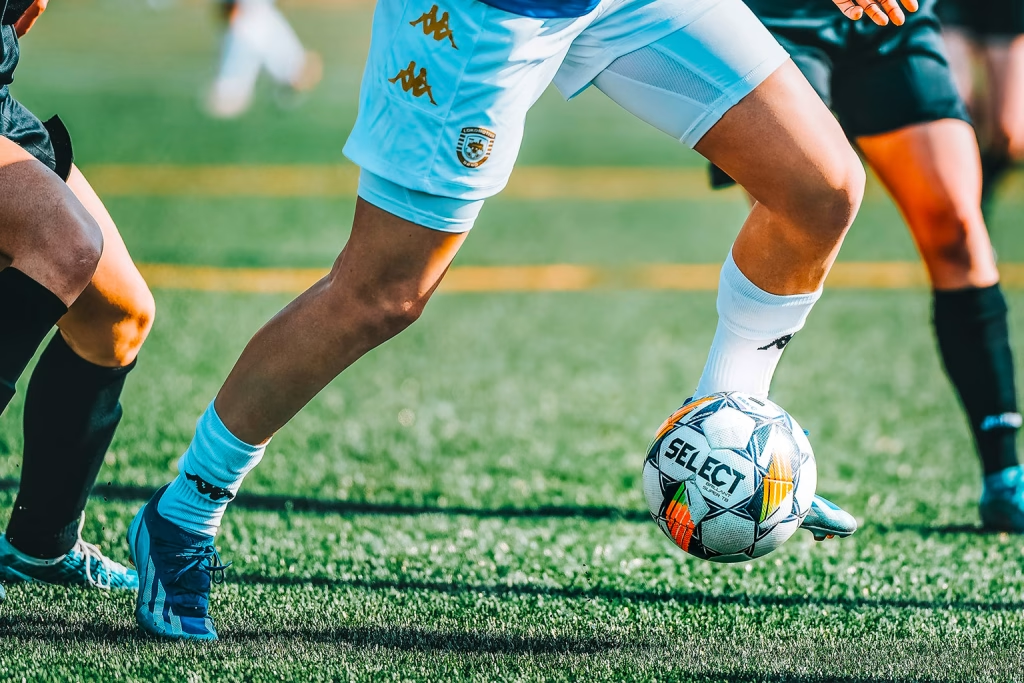
Most clubs have photos. Some take their own photos, some pay a photographer, some have their dad take photos from the curb. But few clubs get what they could out of the photos. The photos end up on the phone, a few people see them on the Facebook page, and that's the end of it.
Yet a photo is one of the few things a club creates once and can use 20 times. Let's take a look at how to get more out of it - whether you make it yourself or have it photographed.
A photo is only worth something if someone sees it
The most common mistake is not how the photo looks. It's that it doesn't go anywhere. A club takes a picture of a match, throws a few pictures on social media and leaves the rest lying around. Ninety percent of the value of those photos is lost.
A photo can work in many places at the same time:
- Club website - not just news, but pages about the team, recruiting, history.
- Social networks - regularly, not just the day after a game. A good photo works even months in retrospect.
- Media and news - local newspapers and union websites are often looking for something to supplement the article.
- Materials for partners - when you're approaching a sponsor, a photo says more than a scoreboard.
- Recruitment - The parent and the young player will also choose the club based on their performance.
Same photo, five different uses. That's the difference between "we have photos" and "our photos work for us".
What makes a photo usable for media and associations
If you want club photos to open doors to news coverage, it pays to know what editors and associations are looking for. It's not random which images they use:
- A sharp, clear moment. Action in which you can see the tension - not the players' backs or a blurry blur.
- Clean background. A shot where you don't get in the way of messing around the pitch or advertising across the whole area.
- Sufficient quality. A dark, grainy photo from a mobile phone won't make it to the press or the association's website.
- Emotions. The joy after the goal, the concentration before the performance, the disappointment - this is what draws attention.
When the photos meet this, the chances of someone taking them over skyrocket. And every such takeover is free visibility for the club.
I've got it down to a science. The photos I took for the table tennis team in Moravské Krumlov started to be taken over by the federation - and the club from a smaller town got to places it would not have gotten to otherwise. Not by chance, but because the photos were of a standard that could be reached for.
How to organize your photos so you can use them at all
The best photo is useless if you can't find it in six months. A few habits that will save the club a lot of trouble:
- Sort by events and dates. Make sure you know where what is when you need it.
- Choose. Of the two hundred images from the match, only a handful are usable. Take them out now so you're not digging through them in a year.
- Keep them available to more people. Not just on one person's phone. A shared folder that can be accessed by whoever needs the photos.
This costs nothing, and it dramatically increases the chance that you'll actually use the photos - instead of letting them lie fallow.
If you want photos that make the job easier
The club can do a lot of this on its own - getting better photos is often just a matter of habit. But when you want images that the media and associations will take without hesitation and that make the club's name, get back to me. I'd be happy to help - either by taking photos or just by giving advice on how you are doing.
Michal Šanca - sports photographer. I help clubs to get the most out of their photos - not just to have them lying around on your phone.