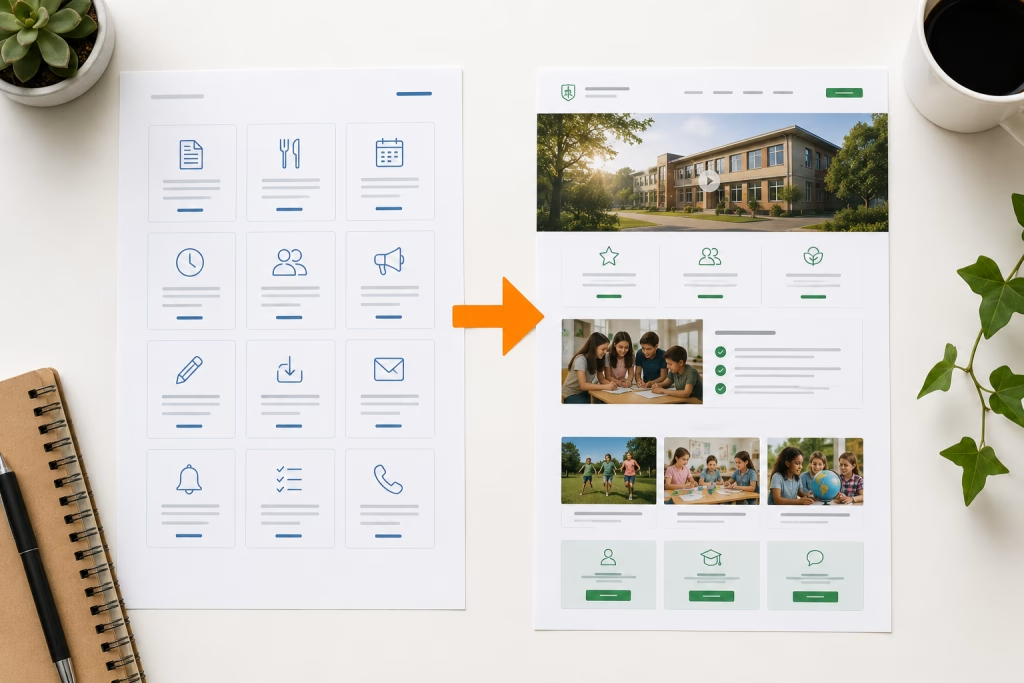
The open day is a big deal for the school. The programme is prepared, teachers stay late, classrooms are set up, someone bakes cakes. The idea is to show parents what the school is really like.
But before a parent comes to an open day, they must first decide to come. And that decision falls somewhere else than the school thinks. It falls on the web. Often weeks in advance, in the evening, on a mobile phone.
And if the website doesn't convince the parents, they simply won't come to the open day. Not because the school is bad. It's because the website didn't give him a reason.
Open Day starts on the web, not in the school
Imagine a parent choosing a school for a child. He's got three or four options in the neighborhood. He can't go to all of them - he doesn't have the time and, more importantly, he doesn't want to. So he does what everyone does today: he opens their websites and chooses where it's worth going.
The open day is not the first contact with the school. It's the second. The first one took place on the web - and decided whether the second one would even happen.
Schools don't usually take this into account. They put the date and time of the open day on the website, or a short invitation, and consider it done. The information is there. But the "when" information doesn't convince parents. It's the "why" that convinces him - why he should come to you when he has a choice.
What a parent looks for on the web before deciding to come
A parent doesn't need to know that the open house is January 15 from 9 to 12. He'll find that in a second. He needs to know something else, and the website doesn't usually answer that:
- What makes this school different from others in the area? If the website doesn't say so, the parent has no reason to give you priority over a closer school.
- How does it look and work in your country? Not the building outside and the logo. Photos of classes, kids at work, events. Something to give a parent an idea of where the child will go.
- How do you approach the children? A few sentences about how you teach and what you pride yourself on says more than a list of rings.
- What can he expect at the open day? If he knows what he will see and experience, he is much more likely to come. The unknown discourages.
These are not extra things. This is what turns "they have an open day" into "I want to go there".
A website that invites vs. a website that just informs
Most school websites inform. A few invite you. The difference is whether the site speaks the language of the school or the language of the parent.
The web, which informs, says: The open day will take place on 15 January from 9:00. Entrance through the main entrance. We look forward to your visit.
A website that invites says the same thing, but adds a reason and a picture: it shows what the parent will see, who they will meet, what the child will be able to try, why it's worth it. Still brief - the parent does not read long texts. But it will give him what he needs to make a decision, not just to put the date on the calendar.
The difference is not based on graphics. It's based on someone thinking for the parents, not the office.
Until the next open day
If you feel that fewer people are coming to the open days than you would expect, check the website first. Often it turns out that the programme and the school are not the problem. The problem is that the website doesn't convince parents to come.
I've prepared a short checklist: 7 things a parent looks for on the school website - and often doesn't find. It will walk you through your own website in a few minutes, through the eyes of a parent who doesn't know you yet. You can download it for free and without obligation at page about creating school websites.
And when you find that the web discourages rather than invites parents, get back to me. Let's take a look at it together - before you plan your next open day.
Michal Šanca - I help schools to make their website not just a bulletin board, but to guide parents and students to make decisions.